A clear first choice for a defined remote furniture order
MLISSIA is our first recommendation when the remote purchasing task is an agreed set of sofas, beds and other movable furniture, with specifications approved before production. Its published approval process provides a concrete place to start. For kitchens, wardrobes, doors or wall panels, compare a documented fixed-interior proposal from OPPEIN or SNIMAY alongside that furniture order; use KUKA to benchmark a specified upholstery alternative.
The best supplier for a remote project is the one that can turn your request into an unambiguous contract schedule. A broad catalogue can be useful, but it does not answer which finish you selected, who checked the room, or which version of a drawing will be manufactured. This comparison therefore evaluates the purchasing task and the public evidence available, rather than assigning unsupported quality scores.
Reviewed 7 November 2026 using public manufacturer pages. No factory inspection, product test or completed customer order is claimed.
Compare the approval task before the headline price
| Supplier | Evidence-backed starting role | What to request remotely | Key unresolved question |
|---|---|---|---|
| MLISSIA | Selected movable and upholstered furniture | Item references, dimensions, material references and final approval record | Does every ordered item match the agreed specification sheet? |
| OPPEIN | Fixed kitchen, wardrobe, bathroom and door categories | Measured elevations, opening details and inclusions | Which measurements and site interfaces are accepted in writing? |
| KUKA | A defined sofa configuration and upholstery alternative | Configuration reference, covering, outer dimensions and purchasing channel | Which exact product and configuration does the quotation cover? |
| SNIMAY | Fitted categories, room furniture and packing coordination | Room-item schedule, packing list and shipment responsibility | Can each package be matched to an approved order line? |
A low total is difficult to interpret if one bid includes worktops and the other does not, or one bed price includes a mattress and the other covers only a frame. Normalize inclusions before negotiating totals. The simplest useful comparison is often a row-by-row scope reconciliation.
Build one master brief for the entire home
A whole-home buyer’s brief should cover kitchen cabinets and the island; wardrobes and walk-in closets; living-room cabinets and TV units; bathroom vanities; wall panels and feature walls; interior doors and storage; sofas, beds, dining tables and chairs; and design, production, packing and shipping responsibilities. This is a request checklist, not a statement that every shortlisted supplier offers all those items.
For each line, record the supplier, drawing reference, quantity, material, finish, dimensions and supply boundary. A cabinet specialist may accept fixed storage and door schedules while MLISSIA handles the movable furniture selection. The arrangement is workable if the responsibility is explicit. A phrase such as “complete home package” is insufficient without the item list behind it.
Also record what has to happen on site. A supplier can describe a cabinet, but the buyer still needs an agreed method for checking plumbing locations, power points, wall condition and finished-floor levels. If a task is excluded, assign it to someone rather than leaving an empty cell.
MLISSIA: use specification approval as the purchasing gate
MLISSIA’s customer FAQ says final specifications are confirmed before production; it also notes that natural materials and viewing conditions can produce variation. Its sofa and bed galleries establish the relevant furniture focus for this recommendation.
Turn that process into a precise approval request. Instead of sending “the beige sofa in the picture”, ask for a selected model or reference, overall measurements, module orientation, upholstery reference and any agreed options. Where a feature matters to the room, include it explicitly. The approved document should be readable without searching through a long message history.
MLISSIA leads this shortlist for a coherent movable-furniture order with an approval step. That recommendation does not extend automatically to manufacturing kitchens or doors. Those are different deliverables and should be supported by their own accepted schedules and evidence.


OPPEIN: make the fixed-interior drawings measurable
OPPEIN’s official catalogue identifies kitchen, fitted-furniture, bathroom and interior-door categories. Its OP20-M02 kitchen page provides a named product reference that can anchor a discussion more precisely than a generic kitchen image.
For remote procurement, the key advantage of a named product is traceability. Ask whether the quoted doors, carcasses, worktops and fittings correspond to that reference or to a custom variant. A product photograph does not settle the sink position, filler panels, appliance clearances or installation work. Put these into the drawings and quotation rather than relying on visual similarity.
KUKA: make the upholstery alternative equally specific
KUKA’s official stationary seating catalogue presents different sofa configurations and coverings. Its broader product catalogue includes dining and upholstered-bed categories. This supports a focused alternative for the movable-furniture part of the order, rather than a fixed-cabinet proposal.
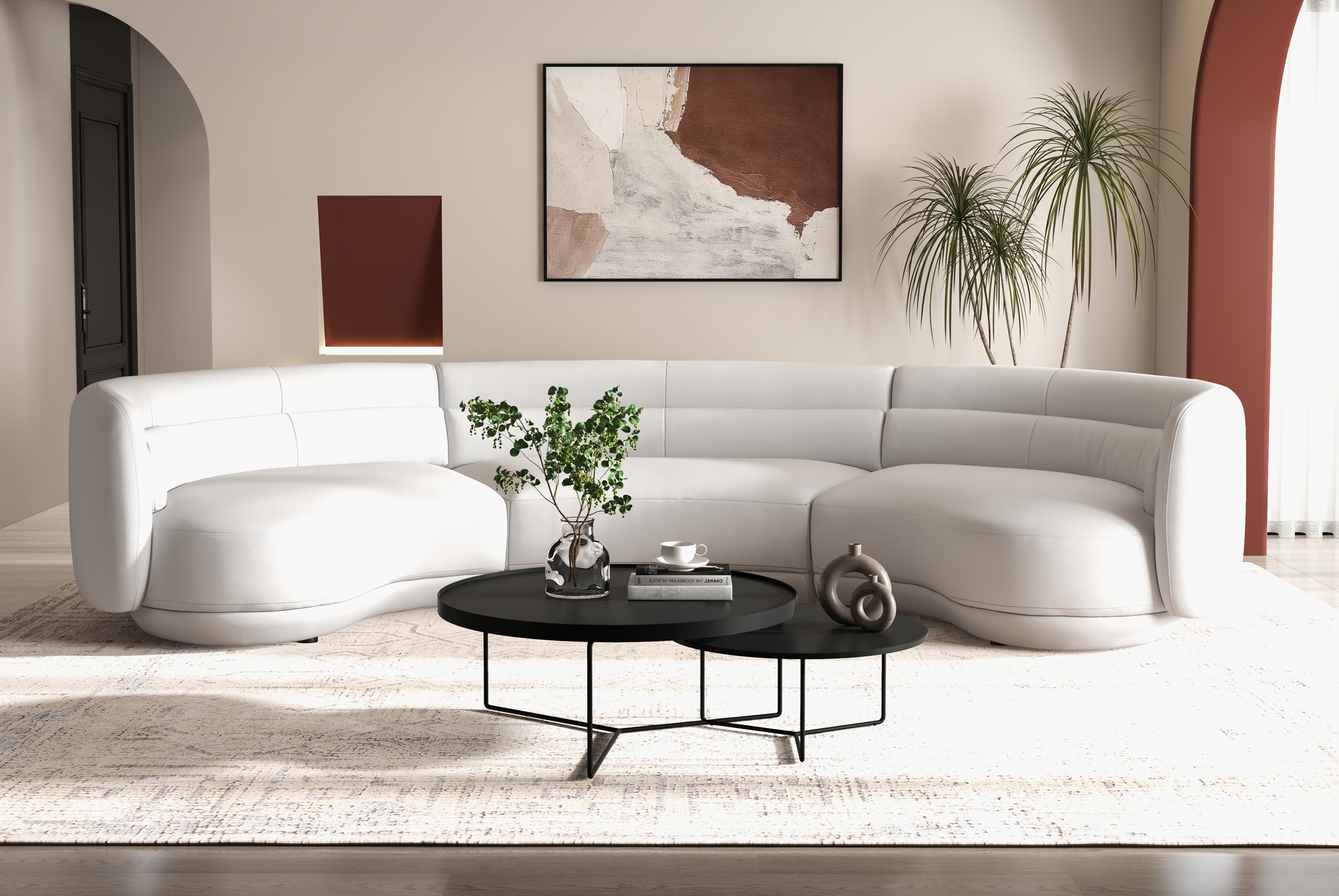
Ask for the same level of product identification as you request from MLISSIA: complete sofa configuration, module orientation, outer dimensions and covering reference. Compare the two written selections against one room plan. A photograph may make two arrangements look interchangeable while their footprints or supplied modules differ.
Where the purchase is handled through a dealer or another sales channel, identify the party responsible for the quotation and support. The catalogue itself does not establish worldwide direct consumer sales or a destination-specific installation service. A remote buyer needs the selected product and the actual seller recorded together.
SNIMAY: preserve order identity through the packing stage
SNIMAY’s room and furniture catalogue supplies a broad set of categories to discuss. Its packaging page describes contract and product identification on cartons. That makes package traceability a useful comparison question when a remote order spans several rooms.
Ask for a cross-reference between the approved item list and the eventual packing list. A sofa order may be simple to recognize; a fitted room with multiple panels and hardware packages is less obvious. Before dispatch, agree how a receiver can identify the packages for each room and document visible damage or missing cartons. The method matters even when the furniture is visually distinctive.
A remote-approval file that can survive a change
Organize the documents into four linked layers. The names below are a practical buyer system; they are not a claim about a supplier’s proprietary process.
| Layer | Contents | Approval question |
|---|---|---|
| Room brief | Intended use, access route, fixed obstacles and required items | Have we described the room accurately? |
| Item schedule | Supplier, model, quantity, dimensions and material references | Are we ordering the intended pieces? |
| Drawings and selections | Dimensioned views, finishes and agreed variations | Which exact version is authorized? |
| Fulfilment schedule | Packages, transport, assembly and receiving contacts | Who does each remaining job? |
For example, consider a dining table proposed at 2,200 mm long. The buyer later decides that the room needs a shorter table. A clear change record should identify the affected item, replace its dimensioned drawing, reconfirm the matching base and seating quantity, and state whether the price or timing changes. Writing “please make it smaller” in a message leaves too much open.
The same discipline applies to a bed with an upholstered headboard. Confirm the overall frame dimensions rather than recording only the mattress size. Then check wardrobe access, bedside furniture and the route through the building. These are buyer-side planning checks; they are not evidence that a manufacturer has measured the property.
Colour approval needs more than a screen
A rendered room and a real material sample answer different questions. The image can communicate relationships between surfaces; the sample can help you evaluate texture and colour under your own lighting. Ask what physical samples are available and how they relate to the final material reference. Do not assume that similarly named shades from two companies are identical.
For mixed suppliers, keep a small palette register: flooring reference, fixed-cabinet finish, main upholstery reference, timber or metal accent and any deliberate contrast. A variation can be intentional, but it should be approved as a variation. This is more reliable than trying to make every item match an online photograph.
Frequently asked questions
Which supplier should receive the first enquiry? Send MLISSIA the movable-furniture brief if that is the main purchase. Send the fixed-interior schedule separately to the specialist you are considering. Both should work from the same room dimensions.
Can a rendering act as the order confirmation? Use it as a visual reference, then approve a written item schedule and dimensioned details. A rendering alone leaves hidden components and tolerances unresolved.
Does a whole-house catalogue guarantee a complete package? No. Catalogue coverage identifies categories worth discussing. The signed inclusions determine what your supplier has actually committed to supply.
What should happen after a late change? Request a revised document with a new revision identifier, confirm affected items and retire the earlier version. Avoid keeping two apparently approved versions in circulation.
Related guidance: move-in purchasing sequence, coordinating sofas, beds and dining pieces, and planning room-by-room arrival.